Park Service plan would open Castle Mountains and Craters of the Moon to hunters
By Central TribunePublished
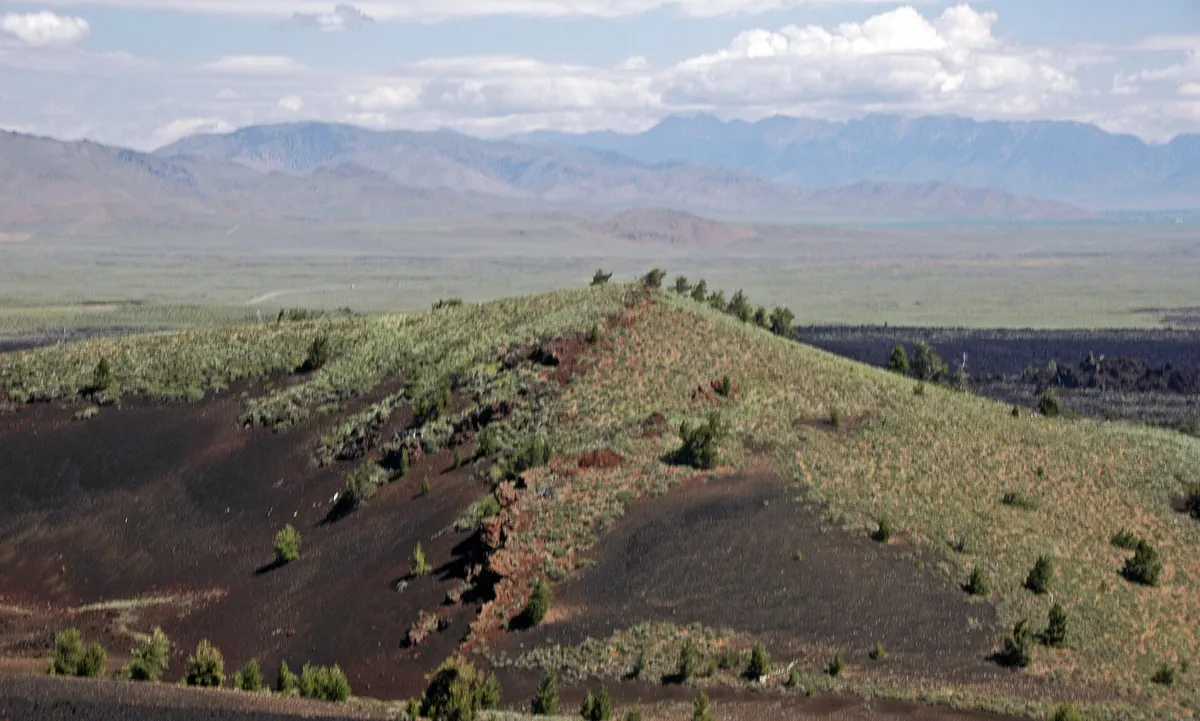
Hunters could get two new places to hunt, Castle Mountains National Monument in California and Craters of the Moon National Monument in Idaho, under proposed National Park Service rules that carry out Executive Order 14429.
Right now, Castle Mountains is closed to hunting. No federal law authorizes it there, and park service rules forbid it. Its 20,920 acres lie in northeastern San Bernardino County, along the Nevada line.
In Idaho, the order covers only the original part of Craters of the Moon, which grew in 2000 from roughly 54,000 acres to about 753,000.
A 2002 law already requires the park service to allow hunting in the National Preserve portion it runs, and hunters are permitted on the part the Bureau of Land Management manages.
Issued Sept. 17, Executive Order 14429 gave the interior secretary 90 days to open both places to hunting of species the Endangered Species Act doesn't cover.
State law would govern hunting in both monuments, except where federal law, park service rules or a superintendent's closure says otherwise. "The regulations would recognize the authority of the States to manage wildlife while also allowing for appropriate management of hunting by the NPS," the agency wrote in the proposal.
Park officials worked out the rules with the California Department of Fish & Wildlife and the Idaho Department of Fish and Game. State seasons and tag quotas aren't expected to change, the agency said.
Whatever state law says, endangered and threatened species would remain off-limits to hunters in both monuments.
At Castle Mountains, hunters would have to keep 200 yards from any wildlife watering place and a mile away from the Castle Mountain Mine, a buffer meant to protect the people who work there. They could still pick up lawfully taken game inside those zones, as long as it wasn't hunted there.
Craters of the Moon would allow only short-range weapons as Idaho law defines them, among them certain shotguns, muzzleloaders, bows, crossbows, handguns and airguns. Modern centerfire rifles wouldn't qualify.
"Other weapons, such as modern centerfire rifles, have effective ranges of hundreds of yards, and projectiles can travel considerably farther," the agency wrote, citing the monument's open landscape.
North and northwest of Highway 20/93, about 5,000 acres at the monument's north end would stay closed. That's less than 10 percent of the acreage that would otherwise open to hunters, the agency said.
Kevin Schluckebier, superintendent at Castle Mountains, and Wade Vagias, his counterpart at Craters of the Moon, could add closures, restrictions or conditions, but only the minimum needed to prevent significant harm to public safety, protected objects or endangered species. Except in emergencies, they'd have to consult state agencies first.
Visitors who don't hunt could bear some costs from noise or other effects, the agency said, though it expects those costs to stay minimal.
Hunters already have more than one million acres of park service land open to them around Castle Mountains. Near Craters of the Moon, hundreds of thousands of acres of BLM and park service land are open as well.
Comments are due by 11:59 p.m. Eastern time on Wednesday, Dec. 16. They can be filed through federalregister.gov or regulations.gov under RIN 1024-AF13, or mailed to the park service's Division of Regulations in Berlin, Maryland.
To finish the rule inside the order's 90-day window, the agency cut the usual comment period to 30 days.