


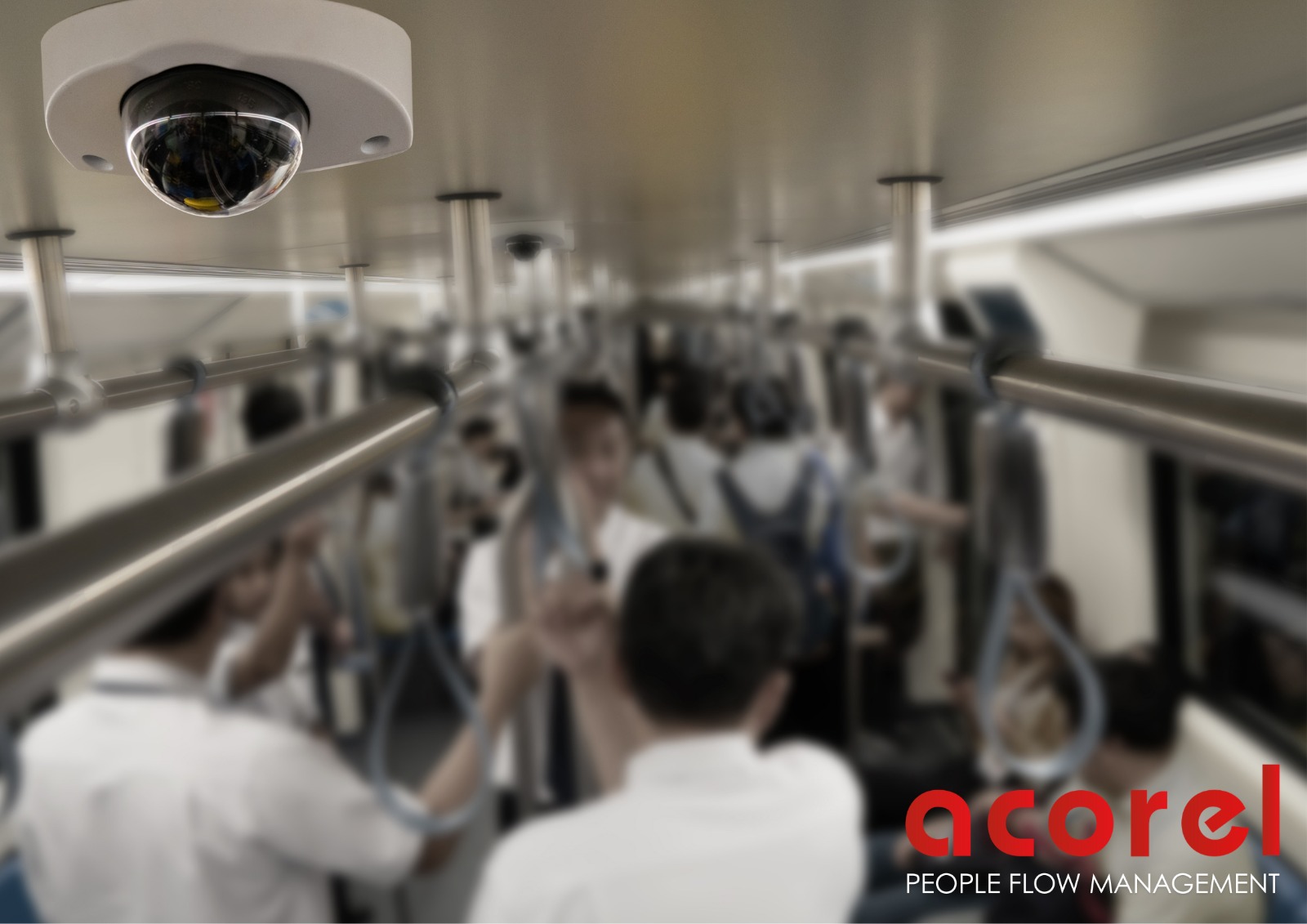
Acorel’s computer vision system gives transit operators real-time data on passenger flow while collecting zero personal information.
As artificial intelligence becomes more deeply embedded in public life, concerns about surveillance and privacy have grown alongside it. Cameras in shops, facial recognition at airports, data collected silently from smartphones — for many people, AI has become synonymous with being watched.
A French technology company called Acorel is taking a different approach. The firm, based in Saint-Péray in the Auvergne-Rhône-Alpes region, has developed a computer vision system designed to help public transport networks run more efficiently — without filming passengers, identifying individuals, or storing any personal data whatsoever.
The technology works through overhead counting sensors installed inside buses, trams, and trains. As passengers board and alight, the system processes their movements in real time, measuring occupancy rates and passenger flow using fully anonymized data. No faces are recorded. No identities are tracked. The footage is never stored.
The result is a continuous stream of operational intelligence that transport operators can use to make better decisions. With accurate real-time data, they can monitor how full vehicles are at any given moment, anticipate congestion before it builds, allocate fleet resources more efficiently across routes, and make long-term planning decisions based on reliable, ground-level information rather than estimates.
“Computer vision can be a powerful optimization tool when it is designed responsibly,” said Dimitri Rudenko, Business Development and Project Director at Acorel. “Efficiency and data protection are not contradictory — they are complementary.”
The system is fully compliant with Europe’s General Data Protection Regulation, known as GDPR, and is engineered to perform accurately even in low-light conditions and during peak-hour crowding, when passenger density is at its highest.
The question of how cities collect and use public data has become increasingly fraught. Many transit authorities have faced public backlash over surveillance systems that record passengers without their explicit knowledge or consent. Acorel’s privacy-by-design model is a direct response to that tension — offering operators the benefits of AI-powered insight while removing the ethical and legal risks that come with traditional video surveillance.
As cities across Europe and beyond accelerate their smart mobility programs, the demand for technology that can balance operational performance with public trust is growing. Acorel argues that the two goals need not be in conflict.
The company has been expanding its presence across public transport networks, positioning its solution not as a surveillance tool but as an operational intelligence layer — one that helps transit systems serve passengers better, without needing to watch them.